The Best Privacy-Focused Smartwatches and Fitness Trackers in 2026
Every wearable brand claims to take privacy seriously. Five structural questions cut through the marketing — and they sort the market far more sharply than any feature list.
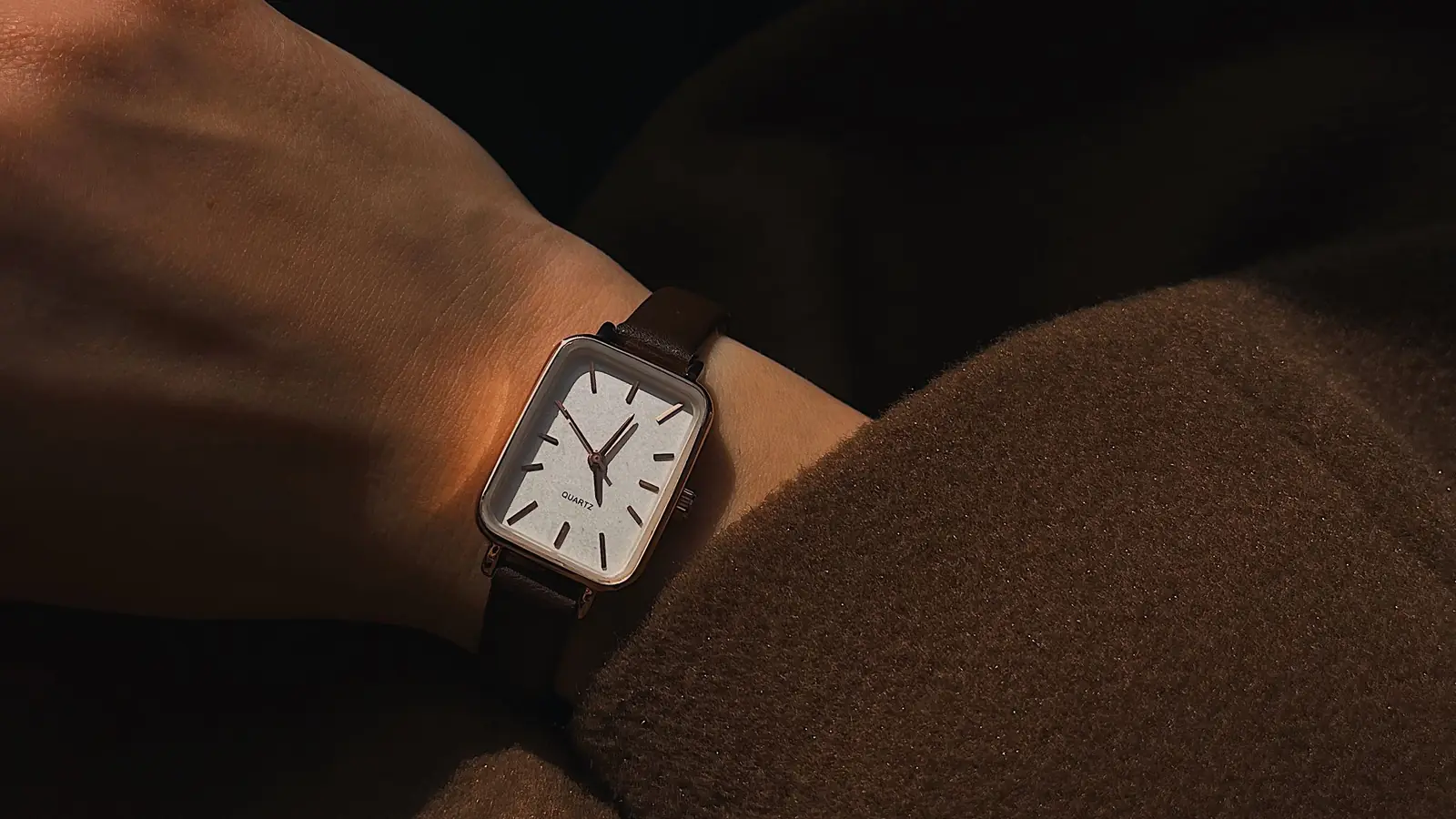
Search for a private smartwatch and you’ll find every manufacturer on earth claiming to take your privacy seriously. It’s a meaningless sentence — no company has ever announced the opposite. What you actually need is a way to tell the claims apart.
This guide skips the marketing and uses five structural questions instead. Structure is harder to fake than a mission statement, and it’s what survives a change of management.
The five questions that actually matter
Features change every year. These don’t.
- 1How does the company make money when you’re not buying anything? A device sold once at a price has a simple, honest answer. A free app inside an advertising conglomerate has a more complicated one. Follow the revenue and you’ll usually predict the privacy policy.
- 2Where is your data processed — on the device, or on a server? On-device processing means there is no central store of your readings to breach, subpoena, or sell. Cloud processing enables heavier analysis and easy cross-device sync, but it creates a database with your name on it.
- 3Can the company read your data? “Encrypted” is nearly universal and nearly meaningless on its own. The real question is who holds the keys. End-to-end encryption means the provider cannot read your data even if it wanted to; standard encryption at rest means it can.
- 4Can you delete everything — in one action, right now? Deletion that requires a support email, a waiting period, or excludes “de-identified copies” isn’t deletion. It’s a request.
- 5Who owns the company, and what happens if that changes? Almost every privacy policy allows your data to transfer in an acquisition or bankruptcy. Data that lives on your own device doesn’t transfer with the brand.
How the major options compare
This table summarises structure, not sensor accuracy. Every one of these devices tracks heart rate and sleep competently; they differ enormously in what happens to the results.
| Device | How the company earns | Where data lives | Ongoing fee for core tracking |
|---|---|---|---|
| Tribe Watch | Hardware sales only. No advertising business. | Processed on your device; anything synced is end-to-end encrypted. | None. An optional insights membership adds weekly reflections. |
| Apple Watch | Hardware, services and an App Store ads business (which Apple states does not use Health data). | Much processed on-device; Health data synced to iCloud is end-to-end encrypted. | None for health features. iPhone required. |
| Garmin | Hardware sales, plus an optional premium tier added in recent years. | Companion app with a cloud account for history and sync. | None for core tracking. |
| Withings | Hardware sales, plus an optional subscription. EU-based, so operates under GDPR. | Companion app with a cloud account. | None for core metrics. |
| Oura Ring | Hardware plus a required membership for full insights. | Cloud-based analysis in the companion app. | Yes — membership needed for most insights. |
| Whoop | Subscription-only. The hardware is bundled with the membership. | Cloud-based analysis; the band has no display of its own. | Yes — the device stops being useful without it. |
| Fitbit | Hardware plus a premium tier, inside Google. | Google account and cloud service. | None for basics; deeper insights are behind Premium. |
| Samsung Galaxy Watch | Hardware, inside a group with substantial advertising and services businesses. | Samsung account and cloud service. | None for core tracking. Works best with a Samsung phone. |
| Amazfit / budget trackers | Low-margin hardware, often with the companion app as the real product. | Cloud accounts, sometimes with data stored outside your own jurisdiction. | Usually none. |
Business models and subscription tiers change frequently — verify current terms with each manufacturer before buying.
The strongest options, and who each one suits
If you already live in Apple’s ecosystem
The Apple Watch is the strongest mainstream privacy option, and it isn’t close. Apple processes a great deal of health analysis on-device, states that Health data synced to iCloud is end-to-end encrypted, and has made privacy a public commercial position it would be expensive to abandon. It is also the most capable smartwatch on the market by a wide margin.
The catches are real, though: it requires an iPhone, battery life is measured in a day rather than a week, and it is an intensely notification-driven device. If your goal is calmer technology rather than a wrist-mounted phone, that last point matters more than the spec sheet suggests.
If you want serious training data without a subscription
Garmin has the best structural story among traditional sports watches: it is a hardware company that has sold devices at a profit for decades, with excellent battery life and no advertising business. Data does sync to a cloud account, so you’re trusting a company rather than an architecture — but the incentives are sound and the device works without a monthly fee.
Withings deserves a mention alongside it, particularly for European buyers: a hardware-first business operating under GDPR, where health data is a special category requiring explicit consent.
If you want the data to stay on your wrist
This is the category we built the Tribe Watch for. Readings are interpreted on your device rather than uploaded for analysis, anything that does sync is end-to-end encrypted, there is no advertising business anywhere in the company, and erasing your entire history is a single tap. Core tracking has no subscription.
Where it doesn’t win: it isn’t trying to be a wrist computer. There’s no large third-party app store, no cellular plan, no smart-home control. It shows heart rate, sleep, and daily activity clearly and then stays out of your way. For some people that’s the entire point; for others it’s a dealbreaker, and the Apple Watch is the better buy.
The ones to think hardest about
Subscription-locked wearables deserve particular scrutiny — not because those companies behave badly, but because the structure concentrates risk. When the hardware only works with an active membership, your access to your own history depends on continuing to pay, and cancelling can mean losing the view of your data rather than the data itself. Before buying one, find out exactly what you can export and what happens to the device if you stop.
Very cheap trackers deserve scrutiny for a different reason. Hardware sold near cost has to be earning somewhere, the companion app is often the real product, and data may be stored in a jurisdiction whose privacy rules you haven’t read. That doesn’t make them malicious — it makes the question worth asking.
The best privacy question isn’t “does this company promise to protect my data?” It’s “what would this company have to give up in order to misuse it?”
A ten-minute check before you buy
Whatever shortlist you land on, run this before you spend anything:
- 1Open the privacy policy and search for “sell”, “share”, “third part”, “de-identified”, “merger” and “delete”. Ten minutes here tells you more than ten reviews.
- 2Find the delete flow in the app’s documentation. If you can’t find it, that is the answer.
- 3Check whether you can export your history in a usable format — the test of whether the data is genuinely yours.
- 4Identify the parent company and whether it sells advertising.
- 5Add up the true five-year cost including any subscription, not just the sticker price.
You’ll notice none of that is about step-count accuracy. That’s deliberate. Modern optical sensors are broadly comparable, and the differences between them fade within a week of ownership. The decision you’re actually making is which company you want holding the most intimate record you’ll ever generate — and that decision lasts as long as you wear the thing.
If it helps, here’s ours in full. It’s deliberately short, and there’s nothing in it we’d rather you skipped.
Frequently asked questions
- What is the most private smartwatch?
- For most people the strongest mainstream options are the Apple Watch — which processes much health data on-device and end-to-end encrypts Health data in iCloud — and hardware-first brands with no advertising business, such as Garmin or Withings. If your priority is that readings never form a central database at all, look for a device that processes data on-device and end-to-end encrypts anything it syncs, such as the Tribe Watch.
- Is there a fitness tracker that does not collect your data?
- Every tracker collects data — that is what a sensor does. The meaningful difference is whether it is processed on your device or uploaded to a company server, whether the company can read it, and whether you can delete it completely in one action. On-device processing is as close as consumer hardware gets to a tracker that does not collect data about you.
- Is the Apple Watch good for privacy?
- Yes — it is the strongest privacy option among mainstream smartwatches. Apple performs much health analysis on-device and states that Health data synced to iCloud is end-to-end encrypted. The trade-offs are practical rather than privacy-related: it requires an iPhone, battery life is roughly a day, and it is a notification-heavy device by design.
- Do I need a subscription for a fitness tracker?
- Not necessarily. Some brands, such as Whoop and Oura, require or strongly depend on an ongoing membership. Others, including Garmin, Apple and Tribe, provide core tracking with no ongoing fee and keep any subscription strictly optional. Always calculate the five-year cost rather than the sticker price.
- How do I check a smartwatch’s privacy before buying?
- Open the privacy policy and search for “sell”, “share”, “third part”, “de-identified”, “merger” and “delete”. Then confirm you can export your history, find the one-tap delete flow, identify the parent company, and check whether it operates an advertising business.
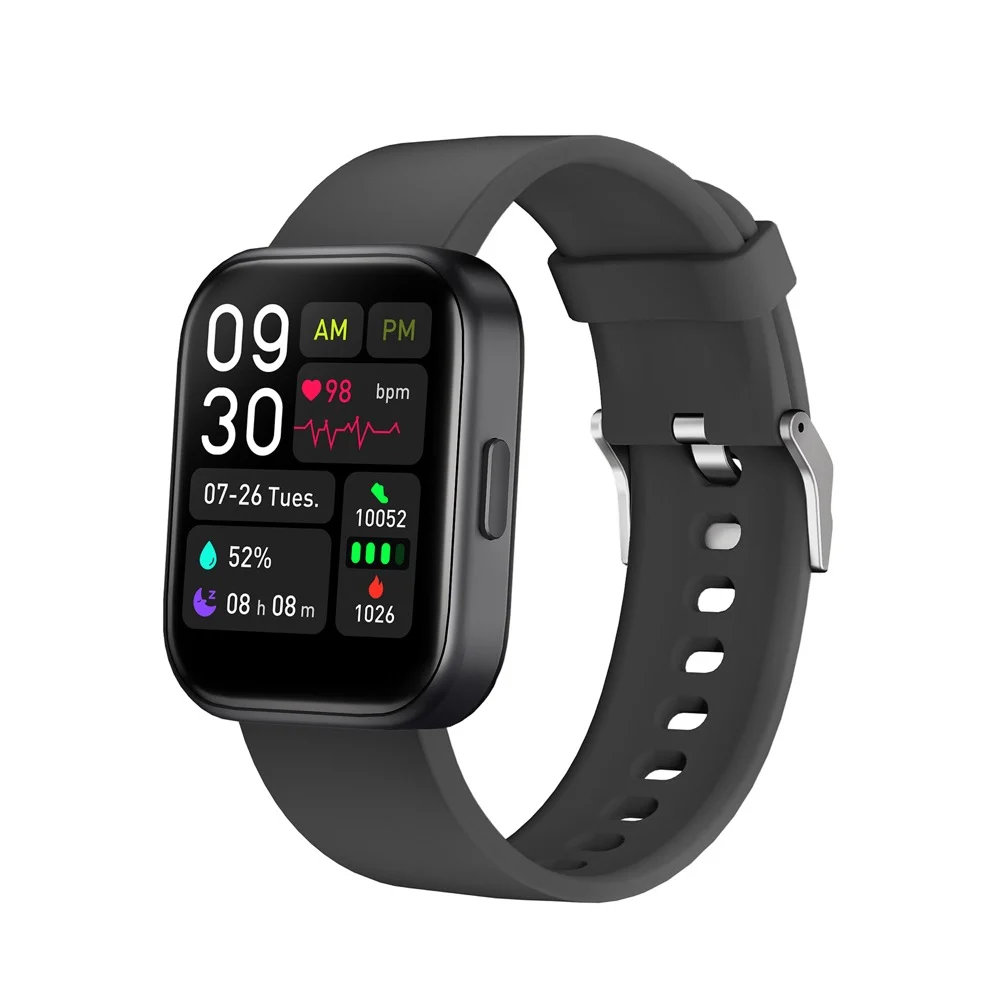
Built against the five questions in this guide
Hardware revenue only, processing on your device, encryption we can’t undo, deletion in one tap — and no subscription for any tracking feature.
- Readings processed on your device, not our servers
- No advertising business — we sell watches, nothing else
- Erase everything with one tap, whenever you want
- No subscription for any tracking feature
Private by design. Yours by default.